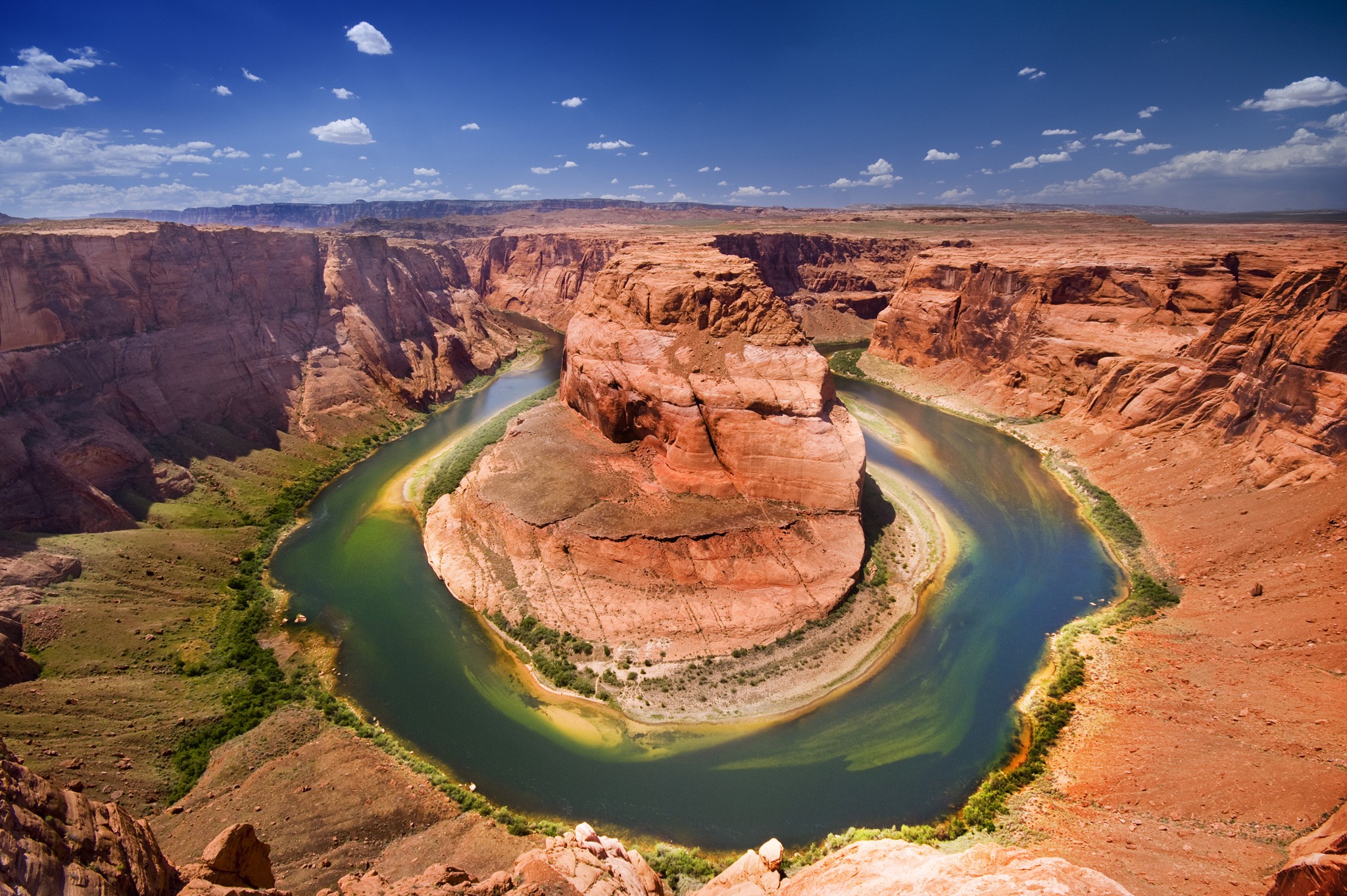
Lake Powell dropped to its lowest level ever recorded on Sunday, Aug. 16, a milestone that underscores the long-term supply pressure facing Sandy residents who get their water through the Colorado River system.
The nation's second-largest reservoir fell to a provisional elevation of 3,519.91 feet, breaking the previous record of 3,519.92 feet set in April 2023, according to Bureau of Reclamation data published Aug. 17. The margin is razor-thin, and federal officials cautioned the daily reading is subject to revision.
The record came less than two weeks after Lake Mead, the nation's largest reservoir, also hit an all-time low. Combined storage in the two reservoirs has fallen to levels not seen since 1957, before Lake Powell even existed, ABC4 reported.
"If you add the two of these reservoirs together, the last time the joint contents were this low was in 1957, before there even was a Powell," said Jack Schmidt, director of the Center for Colorado River Studies at Utah State University. "These are truly unprecedented. We are in completely new territory."
What it means for Sandy
The Metropolitan Water District of Salt Lake and Sandy, Sandy's wholesale water provider, is a Colorado River water user. General Manager Annalee Munsee told the Sandy City Council on May 26 that the district anticipates bonding during fiscal year 2027 for capital improvements and a property tax rate increase in fiscal year 2028.
The reservoir now sits roughly 30 feet above a crisis point for Sandy and other downstream users. If Lake Powell falls below 3,490 feet, Glen Canyon Dam can no longer generate hydroelectric power, and water releases would be restricted. The Bureau of Reclamation warned in April that the lake could breach that threshold without major intervention, projecting minimum probable inflow at just 2.78 million acre-feet for the water year, or 29% of the historical average.
The federal government released its final Environmental Impact Statement for post-2026 Colorado River management on July 31. The plan largely spares Utah from mandatory cuts but sets voluntary conservation targets of up to 200,000 acre-feet per year for Upper Basin states. The current operating guidelines expire at year's end.
Amy Haas, executive director of the Colorado River Authority of Utah, said on July 31 when the plan was released that it envisions lower releases from Lake Powell as hydrology deteriorates, and that "it certainly looks like this is the direction we're headed," according to Fox 13.
Conservation gains won't refill the system
Sandy residents have cut water use by more than 30% over the past three decades, according to Public Utilities Director Tom Ward, who presented to the council in May. The city has also leased conserved water to the Great Salt Lake Trust, a deal expected to generate more than $1 million in credits with Metro Water during the next fiscal year.
But experts say conservation alone won't restore reservoir levels. Sharon Megdal, director of the Water Resources Research Center at the University of Arizona, said it would take multiple consecutive years of above-average snowpack, similar to 2023, to begin refilling the system. Warmer temperatures, dry soils and evaporation mean even average rainfall no longer produces historical runoff.
The Bureau of Reclamation's most probable forecast calls for inflows at 75% of average. Schmidt said that even an exceptional year like 2023 would leave the system in crisis.
The Sandy City Council voted 5-1 on July 7 to override Mayor Zoltanski's line-item veto of a $93,100 appropriation for water capital outlays in the fiscal year 2026-27 budget. No upcoming council meeting date with a water-related agenda item was available at publication time.
.png)