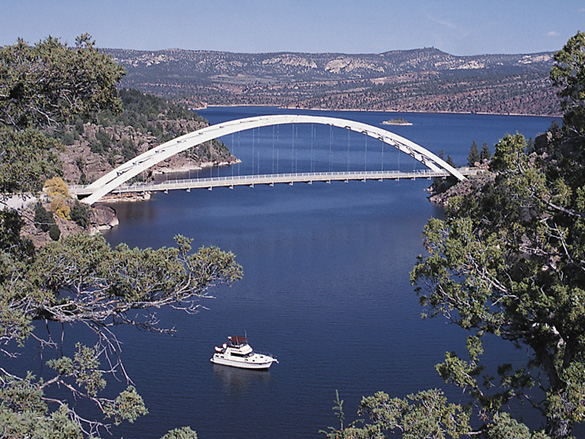
The Secretary of the Interior will likely order additional water releases from Flaming Gorge reservoir beyond the one million acre-feet already authorized, Utah's top Colorado River official warned state lawmakers Tuesday, Aug. 18. The move would further draw down upstream reserves that feed the Colorado River system supplying Sandy's tap water.
Amy Haas, executive director of the Colorado River Authority of Utah, told the Legislature's Interim Natural Resources Appropriations Subcommittee that Lake Powell hit a record-low elevation of 3,519.91 feet on Sunday, Aug. 16, just 30 feet above the level where Glen Canyon Dam can no longer generate hydroelectric power.
"No, they have not been effective in terms of chasing these critical elevations and the Secretary will likely do more … more from Flaming Gorge and will assert his authority under conditions that will enable him," Haas told Fox 13 News after the hearing.
The Bureau of Reclamation had already ordered up to one million acre-feet released from Flaming Gorge to prop up Powell, but the record low suggests those releases have not kept pace with declining levels.
What it means for Sandy
The Metropolitan Water District of Salt Lake and Sandy, the city's wholesale water provider, draws from the Colorado River system. As we reported Aug. 17, Metro Water General Manager Annalee Munsee told the Sandy City Council on May 26 that the district anticipates bonding during fiscal year 2027 for capital improvements and a property tax rate increase in fiscal year 2028. The Aug. 18 testimony signals that federal action could further strain long-term supply reliability for Wasatch Front communities including Sandy.
Sen. David Hinkins, R-Ferron, noted during the hearing that a large chunk of Colorado River water is pumped through the Central Utah Project to become drinking water for much of the Wasatch Front.
Rep. Scott Chew, R-Jensen, called the Flaming Gorge releases a "Band-Aid fix" and told Fox 13 News he hopes the water gets used wisely.
Side-agreement negotiations
Haas said Utah and other Upper Colorado River Basin states are negotiating "side-agreements" with the Trump administration. The terms would require that any released water effectively raises Powell's elevation, that states receive conservation credits including future Flaming Gorge replenishment, and that Utah keeps a seat at the table in future decisions.
The Bureau of Reclamation's final environmental impact statement for post-2026 Colorado River operations explicitly includes the "potential for maximum use" of upstream reservoirs, including Flaming Gorge, to protect dam infrastructure, the Salt Lake Tribune reported Aug. 12. A record of decision is expected before Oct. 1, when the 2027 water year begins.
Sandy residents have cut water use by more than 30% over the past three decades, and Mayor Monica Zoltanski has changed the city's rate structure to hit high-volume users with surcharges. But conservation alone cannot offset federal decisions to move water downstream. No Sandy City Council meeting addressing the Aug. 18 testimony has been scheduled.
.png)