Great Salt Lake dust costs Utah an estimated $116 million a year in health impacts. Sandy sits in the second-hardest-hit county in the state.
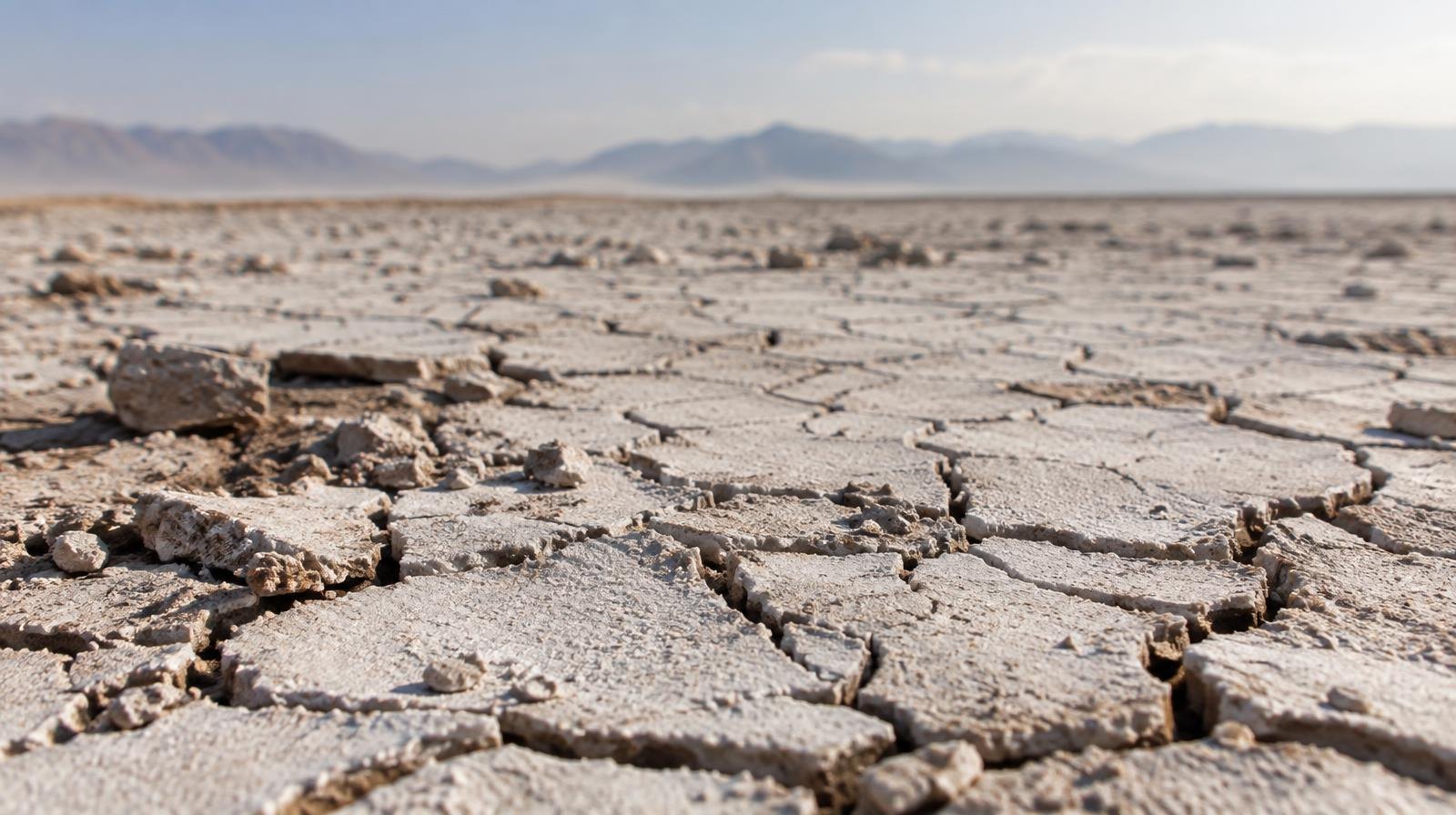
University of Utah researchers mapped 70 square miles of "active dust hotspots" across more than 800 square miles of lakebed now exposed to wind erosion, according to a report first covered by the Deseret News. At the lake's current modeled elevation of 4,192 feet, the dust is linked to approximately six premature deaths, 17,052 work-loss days and nearly 17,748 school absences each year, according to the report.
Salt Lake County ranks second only to Tooele County for modeled dust exposure, the Cottonwood Heights Times reported. That puts Sandy squarely in the impact zone.
Those 70 square miles of hotspots could grow to 187 square miles if protective surface crusts keep degrading or groundwater levels drop, the report found.
Kevin Perry, a University of Utah atmospheric sciences professor who led the study, said in a statement accompanying the report's September release that the state needs to target the highest-risk areas first. The report, titled "Options and Costs for Great Salt Lake Dust Control," was commissioned by the Utah Division of Water Resources for the Great Salt Lake Basin Integrated Plan.
At a Monday, Oct. 5, panel hosted by the Great Salt Lake Alliance at the Zions Bank Building in Salt Lake City, three experts laid out why refilling the lake beats any engineering fix.
"The cheapest and easiest thing to do would just be to put water back into the lake," said Derek Mallia, a research professor in the University of Utah Department of Atmospheric Sciences.
Engineered alternatives evaluated in the report include surface wetting, flooding, brine caps, managed vegetation, chemical suppressants, gravel and tillage. Projected 50-year costs for treating the 70 square miles of hotspots range from $3.2 billion to more than $31 billion, depending on the method and site. If hotspots expand to 187 square miles, those costs could nearly triple.
Bryce Bird, director of the Utah Division of Air Quality, offered a counterpoint at the panel. He said lake dust has not exceeded EPA (Environmental Protection Agency) standards even once, while Utah exceeded the federal ozone standard 19 times in 2026. Bird called ground-level ozone and local dust sources like construction sites more pressing public health concerns.
He also pointed to encroaching development as a factor. Bird said sand and gravel areas once sat a mile from the nearest homes, but planning and zoning commissions have approved subdivisions that keep pushing closer.
David Parrott, associate professor of biology and assistant director of the Great Salt Lake Institute, said the exact makeup of the lake dust remains uncertain. Parrott said arsenic contamination is widely assumed but unproven. He added that micro-irritants such as bacteria and fungi can also travel in the wind.
All three panelists agreed on one point. Refilling the lake is the cheapest path forward.
Through 2060, maintaining current lake conditions would pile up an estimated $5.79 billion in cumulative health costs. Restoring the lake to its minimum healthy elevation of 4,198 feet would lower that figure to $3.71 billion. Reaching the historical average elevation would cut it to $1.89 billion.
Laura Vernon, Great Salt Lake Basin planner at the Utah Division of Water Resources, said in a statement when the report was released in September that its findings will shape long-term water management recommendations as the state finalizes the Basin Integrated Plan. No public comment deadline or adoption date has been announced.
.webp)