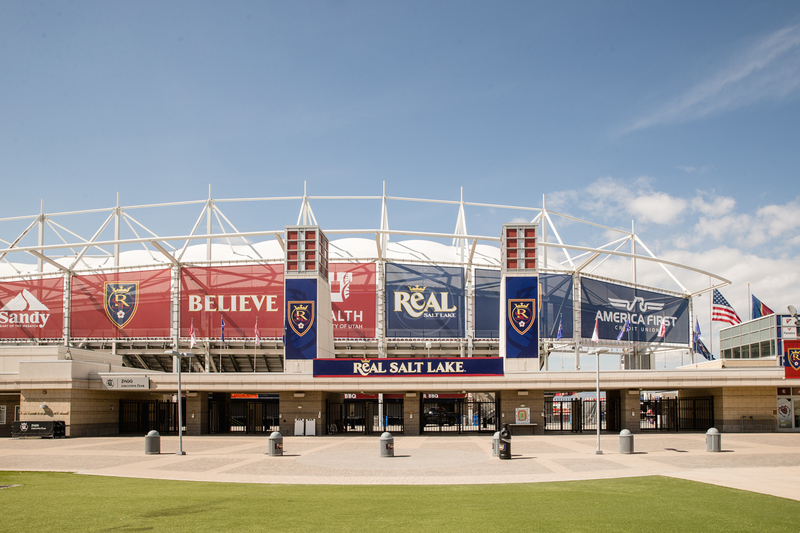
Sandy's America First Field drew 90,000 fans to World Cup watch parties during the June–July 2026 tournament, and Utah's 2034 Winter Olympics organizers say that turnout is shaping how they plan to bring the Games to communities across the state.
"If you can't be at the venue, you can still be in a place where you can feel the energy and be part of an experience that you'll remember for the rest of your life," Starks said.
The organizing committee plans to host community watch parties statewide during the 2034 Games, making the Olympics "bigger than any one venue," according to Starks. All competition sites sit within one hour of the University of Utah campus in Salt Lake City, but the committee dropped "Salt Lake City" from the event's branding last year, renaming it "Utah 2034" to signal engagement beyond the Wasatch Front.
What the watch parties looked like
More than 11,000 fans packed the plaza outside America First Field for the Mexico vs. Ecuador Round of 32 match on Wednesday, July 1. Families unfolded lawn chairs and laid down blankets. Children with painted faces chased soccer balls. Fans in green Mexico jerseys stood shoulder to shoulder with Real Salt Lake supporters.
Former RSL goalkeeper Nick Rimando and Utah Royals players signed autographs. RSL players Sergi Solans, Nate Junqua, and Zach Booth also appeared.
Ticket pricing and the $4 billion budget
Fraser Bullock, president and executive chair of the organizing committee, said the Games' $4 billion budget is projected to come entirely from private sources, primarily broadcast rights, sponsorships, and ticket sales.
Bullock outlined what he called "barbell" pricing: 34,000 tickets at $34 each, with many more priced at $100 or less and some reserved for Utah residents. High-end hospitality packages will fund the difference.
"That's what pays for our Games. That's why we don't need any state or local taxpayer money," Bullock said.
Under the host contract with the International Olympic Committee, Utah taxpayers are responsible for covering any shortfalls if private revenue falls short.
Ticket sales remain roughly five years away. The committee has not determined whether it will follow the World Cup's dynamic pricing model, which pushed some tickets above $10,000 before resale.
Looking ahead: communities could 'adopt' Olympic nations
Bullock also proposed expanding the 2002 Games' "One School, One Country" program for 2034. Entire Utah communities could adopt countries competing in the Olympics, inspired by how World Cup host cities like Boston embraced international fans. "We could broaden it," Bullock said of the program that paired Utah schools with visiting nations more than two decades ago.

.png)
.png)